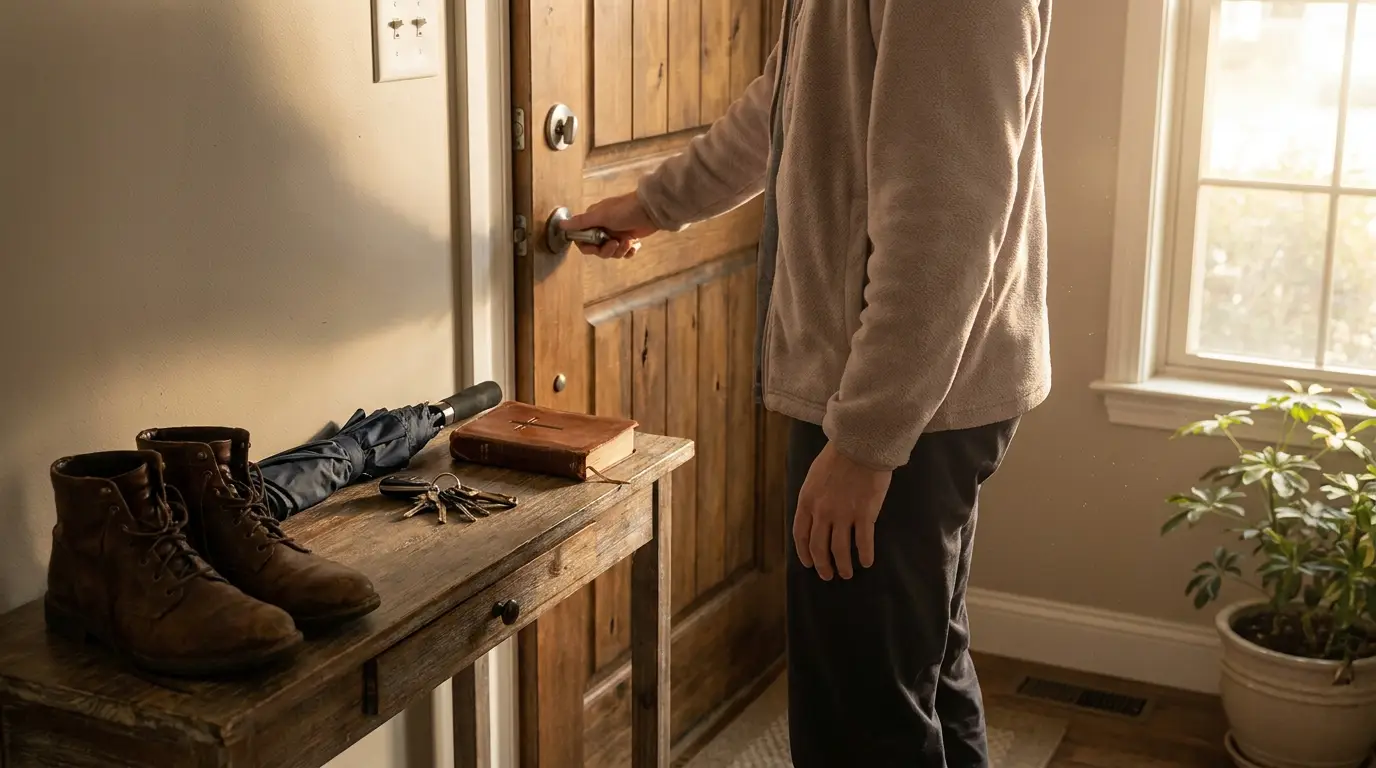


Waiting can be one of the hardest parts of trusting God.
It is one thing to believe God is good. It is another thing to believe He is good when the answer is delayed, the door has not opened, the promise feels far away, and nothing seems to be changing.
You may be waiting for direction.
Waiting for healing.
Waiting for provision.
Waiting for a relationship to be restored.
Waiting for a job, a breakthrough, a child, a spouse, a calling, a change, or a prayer that has been on your heart for a long time.
And while you wait, questions rise.
Why is this taking so long?
Did I miss something?
Is God saying no?
Did He forget me?
Why does it seem easier for other people?
Trusting God’s timing does not mean waiting never hurts. It does not mean you always feel patient. It does not mean you never ask questions or feel disappointed.
Trusting God’s timing means you choose to believe that God is faithful even when His pace is different from yours.
It means you surrender not only the outcome, but also the timeline.
It means you learn to walk with Him today while He holds what you cannot see tomorrow.
God’s Timing Is Not Always Easy to Understand
Sometimes God’s timing feels confusing.
You pray, but the answer seems delayed.
You obey, but the door stays closed.
You wait, but someone else seems to receive what you have been praying for.
You try to stay faithful, but the season feels longer than you expected.
In those moments, it is tempting to assume that silence means absence or delay means denial. But the Bible shows us again and again that God’s timing often looks different from human expectations.
Abraham and Sarah waited many years for the son God promised.
Joseph waited through betrayal, false accusation, and prison before stepping into the role God had prepared.
Moses spent decades in hidden places before God called him to lead Israel out of Egypt.
David was anointed as king long before he actually sat on the throne.
Mary and Martha waited for Jesus to come when Lazarus was sick, and Jesus did not come on the timeline they expected.
Even the coming of Jesus happened in what Scripture calls the fullness of time.
God is not hurried the way we are hurried. He is not anxious the way we are anxious. He is not guessing. He is not late because He has lost control.
His timing may be hard to understand, but it is never careless.
Delay Does Not Mean God Has Forgotten You
For a fuller look at waiting, why God allows waiting seasons helps you avoid assuming delay means abandonment.
One of the painful parts of waiting is the feeling of being forgotten.
When nothing changes, the heart starts asking quiet questions.
Does God still see me?
Does He still hear me?
Does this matter to Him?
Did I do something wrong?
But delay is not proof that God has forgotten you.
Psalm 139 reminds us that God knows us completely. Jesus teaches that the Father knows what we need. Scripture repeatedly shows that God sees His people in hidden places, waiting seasons, wilderness seasons, and painful delays.
You may feel forgotten, but you are not forgotten.
You may feel unseen, but you are not unseen.
You may feel like nothing is happening, but that does not mean God is doing nothing.
Some of God’s deepest work happens in hidden places.
A seed buried in the ground does not look active from the surface. But beneath what can be seen, life is forming. Roots are growing. Strength is being established before fruit appears.
Waiting can feel like being buried. But in God’s hands, waiting can also become a place of formation.
He may be strengthening your trust.
He may be purifying your desires.
He may be preparing you for what you asked for.
He may be protecting you from what you cannot see.
He may be working in other people, other circumstances, or other details that are not visible to you yet.
The waiting is not wasted when God is in it.
God Is Forming You While You Wait
Most of us want God to change the situation quickly.
Sometimes He does.
But often, while we are waiting for God to change something around us, He is also changing something within us.
Waiting reveals what we are leaning on.
It reveals whether our peace depends on getting the answer we want.
It reveals whether we trust God only when He moves at our pace.
It reveals our desire for control.
It reveals impatience, fear, comparison, and places where our hearts are still learning surrender.
That does not mean God delays just to make us suffer. He is not cruel. But He is a Father who forms His children with wisdom and love.
James speaks about endurance producing maturity. Romans speaks about suffering producing endurance, character, and hope. Scripture does not treat waiting and hardship as meaningless when they are surrendered to God.
God can use waiting to make your faith deeper, steadier, and less dependent on circumstances.
He can teach you to pray more honestly.
He can teach you to obey without seeing the whole outcome.
He can teach you to rest without having every answer.
He can teach you to desire Him more than the gift you are waiting for.
This is one of the tender but difficult truths of trusting God’s timing: sometimes the waiting season is not only about what God will give later. It is also about who He is forming in you now.
Surrender Your Timeline, Not Just Your Desire
If the future feels hard to release, trusting God with your future can help you surrender without refusing wise planning.
Many people surrender the desire but not the timeline.
They say, “God, I trust You with this,” but underneath the prayer is a deadline they are afraid to release.
“Lord, I trust You, but please do it by this month.”
“Lord, I surrender this, but I need the answer now.”
“Lord, Your will be done, but I do not want to wait any longer.”
God is not offended by honest desire. You can ask Him for timing. You can tell Him you are tired. You can pray specifically and boldly.
But peace often requires surrendering the timeline too.
This is hard because time feels personal. When God delays, it can feel like life is passing you by. It can feel like opportunities are closing. It can feel like other people are moving forward while you are still waiting.
But God is not bound by your fear of being late.
He knows how to redeem time.
He knows how to open doors no person can open.
He knows how to restore what seems lost.
He knows how to prepare you and the situation at the same time.
He knows the right season.
You can pray:
“Father, I still desire this, but I surrender the timeline to You. Help me trust that You are not late, even when I feel impatient.”
That prayer may need to be prayed more than once. Surrendering time is not always a single moment. Sometimes it is a daily release.
Stop Comparing Your Timeline With Someone Else’s
Comparison makes waiting heavier.
You see someone else receive the answer you wanted.
Someone else gets married.
Someone else has the child.
Someone else gets the opportunity.
Someone else seems to move forward faster.
Someone else’s prayer seems answered quickly while yours remains unresolved.
Comparison can turn waiting into resentment if you are not careful.
It can make you question God’s goodness toward you. It can make another person’s blessing feel like a threat. It can make you believe that God has less for you because He gave something to someone else.
But God is not limited.
Another person’s answered prayer does not mean God has forgotten yours.
Another person’s timing does not cancel God’s care for you.
Another person’s story is not the measure of your worth.
Peter once asked Jesus about John’s future, and Jesus redirected him back to his own calling: “You follow me.” That is a needed word for waiting hearts.
Do not let someone else’s timeline pull your eyes away from Jesus.
God is not asking you to live their story. He is calling you to follow Him in yours.
You can rejoice with others and still bring your own ache to God.
You can celebrate someone else’s blessing without believing God has abandoned you.
You can trust that the Father who sees them also sees you.
Do Not Rush Ahead of God
Waiting can tempt us to take control.
When God seems slow, we may start looking for shortcuts.
We force doors that are not opening.
We make decisions out of panic.
We settle for less than what God is leading us toward.
We manipulate situations.
We try to make something happen because we are afraid nothing will happen if we wait.
But rushing ahead of God rarely produces peace.
It may give temporary relief because it feels like movement, but movement is not always obedience.
In Scripture, impatience often leads people into painful consequences. Abraham and Sarah struggled to wait for God’s promise and tried to produce the outcome in their own way. Saul grew impatient and acted outside of obedience. The Israelites often complained and wanted to return to what was familiar because waiting in the wilderness felt too hard.
Waiting on God does not mean doing nothing. It means refusing to move in fear when God has not led you to move.
There is a difference between a faithful step and a fearful shortcut.
A faithful step is led by prayer, wisdom, Scripture, and surrender.
A fearful shortcut is driven by panic, pressure, comparison, or unbelief.
Before you act, ask:
“Am I obeying God, or am I trying to escape the discomfort of waiting?”
That question can save you from many unnecessary burdens.
Take the Next Faithful Step While You Wait
Trusting God’s timing does not mean your life stops until the answer comes.
You can still be faithful today.
You can still pray.
You can still serve.
You can still grow.
You can still work with excellence.
You can still love the people in front of you.
You can still steward what God has already placed in your hands.
You can still obey the last thing He made clear.
Sometimes waiting becomes unhealthy because we put life on hold until one specific thing changes. We tell ourselves we cannot have joy, peace, purpose, or obedience until God answers this prayer.
But God is with you in the waiting season too.
This season may not be the one you would have chosen, but it is still a place where you can walk with Jesus.
Ask Him:
“Lord, what does faithfulness look like today?”
Not, “How do I force the future to arrive?”
Not, “How do I make this waiting end?”
But, “How can I follow You here?”
The next faithful step may be simple.
Open Scripture.
Pray again.
Rest.
Do the work in front of you.
Seek counsel.
Forgive.
Prepare wisely.
Serve quietly.
Wait without bitterness.
Small obedience in a waiting season is never small to God.
Let Waiting Deepen Your Relationship With Jesus
Waiting can reveal whether we want God mainly for the answer or for Himself.
That is not an easy thing to face.
Many of us come to God with real desires, and that is good. He is a Father. He invites us to ask. But sometimes, in the waiting, He gently exposes how much our hearts have attached peace, identity, or hope to a specific outcome.
We may begin to think, If I do not get this, I cannot be okay.
But Jesus invites us into something deeper.
He does not only want to give gifts. He wants to give Himself.
In the waiting, you can learn to know Him in ways you might not have known Him if everything came quickly.
You can learn Him as Comforter.
You can learn Him as Shepherd.
You can learn Him as Provider.
You can learn Him as Peace.
You can learn Him as the One who stays when the answer has not come yet.
This does not make the desire wrong. It simply puts the desire in its proper place.
The gift is not meant to become your god.
The answered prayer is not meant to become your foundation.
The timeline is not meant to become your source of peace.
Jesus is.
Sometimes the waiting season becomes sacred because it teaches your heart to seek Him first again.
Remember That God’s Timing Is Personal, Not Mechanical
God does not lead every person the same way at the same pace.
This can be difficult because we like formulas.
We want to know that if we pray a certain way, wait a certain amount of time, obey certain steps, and do everything correctly, then the answer will come exactly when we expect.
But God is not a machine. He is Father.
His timing is relational, wise, and personal.
He knows what you need.
He knows what needs to be formed in you.
He knows what needs to be arranged around you.
He knows what needs to be healed, strengthened, removed, or prepared.
He knows the doors you cannot see.
He knows the dangers you do not recognize.
He knows the blessing you may not be ready to carry yet.
This does not mean every delay is easy to accept. But it reminds you that God’s timing is not random.
He deals with His children personally.
You are not lost in a crowd. You are known by your Father.
Ask God for Patience Without Becoming Passive
Sometimes people think waiting on God means becoming passive.
They assume trusting God’s timing means making no plans, taking no steps, asking no questions, and simply letting life happen.
But biblical waiting is not passive.
It is active trust.
It prays.
It listens.
It prepares.
It obeys.
It watches for God’s leading.
It refuses to manipulate.
It remains faithful with what is already clear.
Patience does not mean you stop caring. It means you stop striving in your own strength.
You can prepare while you wait.
You can grow while you wait.
You can seek wisdom while you wait.
You can knock on doors while still trusting God to open or close them.
You can make plans while holding them with open hands.
The heart posture matters.
Are you moving with God, or are you trying to outrun Him?
Are you preparing in faith, or forcing in fear?
Are you asking for wisdom, or demanding control?
Trusting God’s timing means you remain responsive to Him, not frozen by fear and not driven by panic.
When God’s Timing Feels Painful
If waiting is tied to unanswered prayer, trust God when prayers are unanswered keeps grief and trust together.
There are waiting seasons that do not feel peaceful. They hurt.
Waiting for healing can hurt.
Waiting for restoration can hurt.
Waiting for a child can hurt.
Waiting for marriage can hurt.
Waiting for direction can hurt.
Waiting for provision can hurt.
Waiting for God to change a situation can hurt deeply.
Trusting God’s timing does not mean you are not allowed to grieve.
You can cry and still trust.
You can feel tired and still pray.
You can feel disappointed and still stay close to Jesus.
You can say, “Lord, this hurts,” without turning away from Him.
The Bible gives space for lament. The Psalms are full of honest prayers from people who were waiting, hurting, and asking God how long.
God is not asking you to pretend the waiting is easy.
He is inviting you to bring the pain of waiting into His presence.
Sometimes the most faithful prayer is simply:
“Lord, I trust You, but this is hard. Help me wait with You.”
That prayer is enough for today.
Watch for God’s Faithfulness in the Waiting
When you are focused only on the answer you are waiting for, you may miss the ways God is already being faithful.
He may not have changed the whole situation yet, but He may be sustaining you.
He may be giving daily strength.
He may be sending encouragement through Scripture, people, or unexpected provision.
He may be growing wisdom in you.
He may be protecting you from decisions you would have made too quickly.
He may be softening your heart.
He may be teaching you to pray with deeper honesty.
He may be helping you endure one day at a time.
These things matter.
God’s faithfulness is not only seen at the finish line. It is also seen in the grace that keeps you while you are still on the road.
If you cannot see the big answer yet, look for daily mercies.
Look for strength you did not have before.
Look for small reminders of His care.
Look for ways He is keeping your heart from hardening.
Look for the next step He has provided.
The waiting season may still be unfinished, but God’s faithfulness is not absent from it.
Trust That God Knows the Right Time
Ecclesiastes says there is a time for everything and a season for every matter under heaven.
We may not always understand the season we are in, but God does.
He knows when to open and when to close.
He knows when to give and when to withhold.
He knows when to reveal and when to hide.
He knows when to move quickly and when to form slowly.
He knows when the time is right.
This is hard to accept because we usually think the right time is now. But our sense of timing is limited. We see our desire. God sees the whole story.
He sees your heart.
He sees the people involved.
He sees the future consequences.
He sees what needs to be prepared.
He sees what needs to be protected.
He sees what you cannot see.
Trusting God’s timing means saying:
“Lord, I do not see the whole picture, but You do. Help me trust that You know the right time.”
That does not remove every ache from waiting. But it anchors the heart in God’s wisdom instead of your own limited understanding.
A Prayer to Trust God’s Timing
Father, I come to You with the waiting place in my life. You know what I desire. You know how long I have prayed. You know the questions, disappointment, impatience, and weariness in my heart.
I confess that I often want my timeline more than I want to trust Yours. I want answers now. I want clarity now. I want movement now. But I surrender my timing to You.
Help me believe that You are not late. Help me remember that delay does not mean You have forgotten me. Teach me to trust Your wisdom when Your pace feels slow to me.
Jesus, walk with me in this waiting season. Keep my heart from bitterness, comparison, and rushing ahead. Help me take the next faithful step today.
Holy Spirit, strengthen me with patience. Show me what You are forming in me. Open my eyes to the ways God is already faithful while I wait.
Father, I trust You with the outcome, and I trust You with the timing. Let my heart rest in Your hands.
Amen.
God Is Faithful in the Waiting
Trusting God’s timing is not always easy.
It may require surrender again and again.
It may require patience when nothing seems to be changing.
It may require worship while you are still waiting.
It may require refusing comparison, resisting shortcuts, and choosing obedience when the timeline feels unclear.
But you are not waiting alone.
God sees you.
God hears you.
God is forming you.
God is sustaining you.
God knows the right time.
And God is faithful even before the answer comes.
So bring Him your impatience.
Bring Him your questions.
Bring Him your desire.
Bring Him the timeline you are afraid to release.
Then take the next faithful step with Jesus today.
You may not know when the answer will come. You may not know how God will move. You may not know what He is arranging behind the scenes.
But you can trust His heart.
You can trust His wisdom.
You can trust His pace.
And while you wait, you can rest in this truth: God is never late, never careless, and never absent from the lives of His children.
Related Articles
- Why Does God Allow Waiting Seasons? – Understand waiting without assuming God forgot you.
- How to Trust God with Your Future – Surrender the future while still making wise plans.
- How to Trust God When Prayers Are Unanswered – Keep praying when answers are delayed or different.
- How to Trust God After Disappointment – Trust God after painful outcomes without denying grief.
- How to Have Peace When Life Feels Uncertain – Find peace without needing perfect clarity.
- Prayer for Peace of Mind – Pray for peace when thoughts feel overwhelming.