
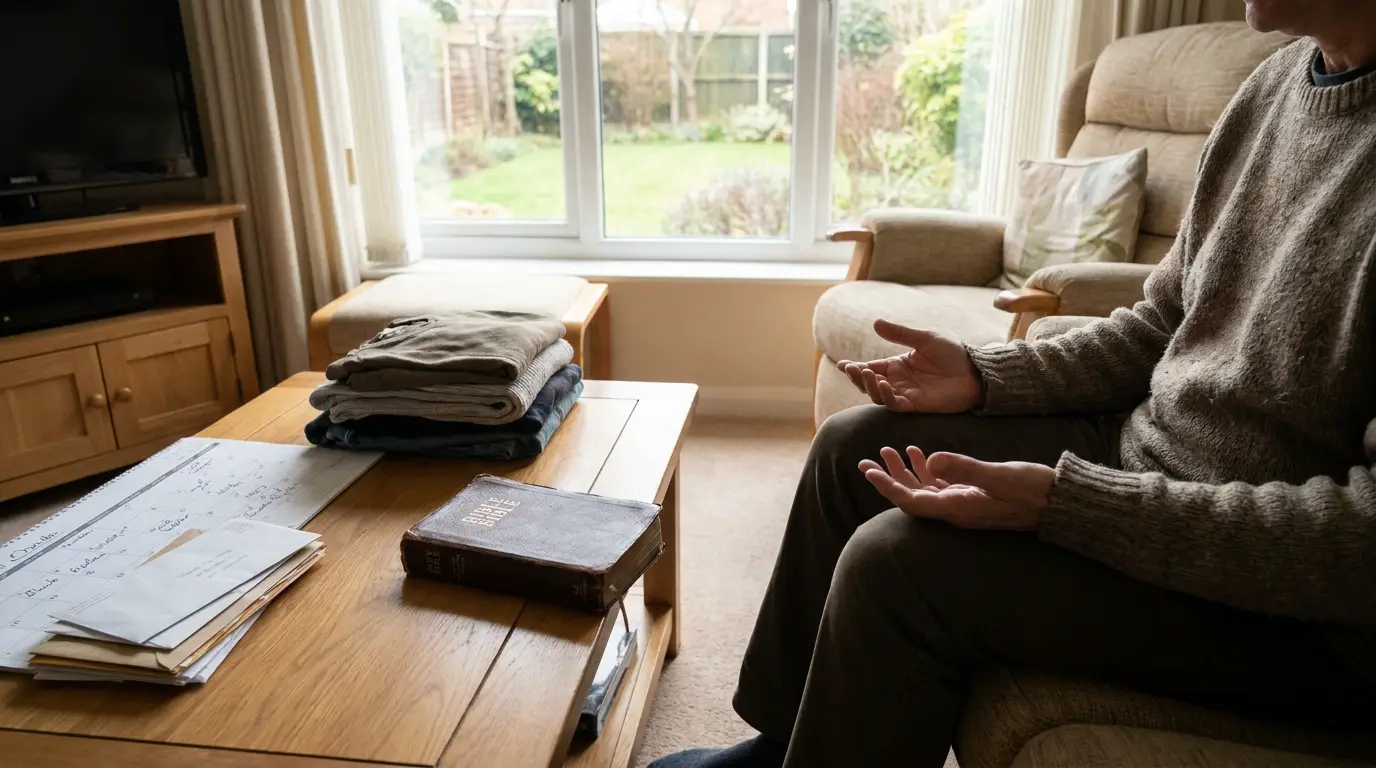

To surrender to God means to stop living as if you are the final authority over your life and to willingly place yourself under His loving rule.
It means you give God your heart, your plans, your desires, your fears, your decisions, your future, and your whole life. Not because He wants to control you in a harsh way, but because He created you, loves you, knows what is best for you, and is worthy to be trusted.
Surrender is not weakness. It is not giving up in hopelessness. It is not losing your personality, your dreams, or your ability to make choices.
True surrender is trust.
If you want the Jesus-centered version of this question, surrendering your life to Jesus shows what surrender means for discipleship. For daily practice, surrendering to Jesus daily turns the meaning into ordinary choices. When surrender feels like losing hope, surrender versus giving up explains the difference.
It is the heart saying, “God, You are Lord. I do not want to live apart from You. I want Your will more than my own. I trust Your way above mine.”
For many people, surrender sounds scary at first. We may think it means God will take away everything we enjoy or send us into a life we never wanted. But surrendering to God is not about being pushed into misery. It is about coming under the care of the One who sees clearly, loves perfectly, and leads faithfully.
The safest place for your life is not in your own control. It is in God’s hands.
Surrender Means God Becomes First
At the center of surrender is this simple truth: God takes first place.
Not second place. Not emergency-only place. Not Sunday-only place. First place.
Many people believe in God, pray to God, and want help from God, but still try to keep control of the direction of their lives. They want God’s blessing, but not always His authority. They want His comfort, but not always His correction. They want His promises, but not always His instruction.
Surrender means we stop treating God as an addition to our plans and begin recognizing Him as Lord over everything.
This includes our relationships, money, work, time, emotions, decisions, dreams, habits, and private thoughts. There is no part of life that is outside His reach.
When God is first, we no longer ask only, “What do I want?”
We begin to ask, “Lord, what pleases You?”
That shift is at the heart of surrender.
Surrender Is Not the Same as Doing Nothing
Some people misunderstand surrender as passivity.
They think surrender means, “I will just sit here and do nothing because God is in control.” But biblical surrender is not laziness, irresponsibility, or refusing to make wise choices.
A surrendered person still works. A surrendered person still plans. A surrendered person still takes responsibility, makes decisions, serves others, and moves forward in faith.
The difference is the posture of the heart.
Instead of saying, “I must control everything,” surrender says, “Lord, help me be faithful with what You have placed before me, and I trust You with what I cannot control.”
Surrender does not remove action. It purifies action.
You still do your part, but you stop pretending you are God.
You still care, but you do not carry everything alone.
You still plan, but you hold your plans with open hands.
You still work hard, but your identity is no longer built on outcomes.
This is one of the most freeing parts of surrender. You do not have to abandon responsibility. You simply learn to carry responsibility with God instead of trying to carry control by yourself.
Surrender Means Letting Go of Control
Control is one of the hardest things to release.
We want to know what will happen. We want certainty. We want our plans to work. We want people to respond the way we hope. We want life to unfold according to the picture in our minds.
But much of life is outside our control.
We cannot control every outcome. We cannot control other people’s choices. We cannot control every delay, disappointment, opportunity, loss, or change. And when we try to control everything, our hearts become tired, anxious, and restless.
Surrender is not pretending you do not care. It is choosing to trust God with what you cannot control.
It may sound like this:
“Lord, I have done what I can do. I give the outcome to You.”
Or:
“God, I do not understand this situation, but I trust that You are still faithful.”
Or:
“Father, I want this badly, but I want Your will more.”
Letting go of control does not mean your heart will never wrestle. Sometimes surrender happens with tears. Sometimes it happens while your hands are still shaking. Sometimes it happens one prayer at a time.
But every time you give control back to God, your heart is reminded of the truth: you were never meant to be your own savior.
Surrender Means Trusting God’s Will
To surrender to God is to trust His will above your own.
This can be difficult because we often assume our way is best. We see what we want. We feel what we feel. We imagine what would make us happy, secure, successful, or fulfilled.
But God sees more than we see.
He sees the beginning and the end. He sees motives, dangers, timing, consequences, and purposes that we cannot fully understand. What looks good to us may not always be good for us. What feels like a delay may be protection. What feels like a closed door may be mercy. What feels like loss may become part of a deeper work God is doing in us.
Surrender says, “God, I may not understand Your will, but I trust Your heart.”
That does not mean every painful thing is easy to accept. It does not mean we never grieve, ask questions, or struggle. Faith is not pretending everything feels simple.
But surrender brings our questions to God instead of using our questions as a reason to walk away from Him.
A surrendered heart can say, “Lord, this is hard, but I still want You. I still trust You. I still believe Your way is better than mine.”
Surrender Means Obedience
Surrender is more than a feeling. It becomes visible through obedience.
It is possible to say, “God, I surrender,” but still resist what He has clearly shown us to do. We may say we want His will, but continue choosing our own way when His Word confronts our desires.
True surrender asks, “Lord, what are You calling me to obey?”
Sometimes obedience is private. It may mean turning away from a hidden sin, changing an attitude, confessing something, forgiving someone, or letting go of bitterness.
Sometimes obedience is practical. It may mean making a phone call, apologizing, setting a boundary, serving faithfully, giving generously, telling the truth, or choosing integrity when no one is watching.
Sometimes obedience is costly. It may mean saying no to something you wanted because you know it is not pleasing to God.
Obedience does not earn God’s love. We are not saved by our performance. But obedience is one of the clearest signs that we truly trust Him.
If we call God Lord, we cannot continue treating His Word as optional.
Surrender says, “Even when my flesh wants another way, I choose Your way.”
Surrender Means Giving God Your Whole Heart
God does not want only the religious part of your life.
He wants your whole heart.
It is easy to give God the parts of our lives that already look acceptable while hiding the parts we feel ashamed of, protective over, or unwilling to change. But surrender means we invite Him into every room of the heart.
We bring Him our love, but also our fear.
We bring Him our worship, but also our weakness.
We bring Him our dreams, but also our disappointments.
We bring Him our obedience, but also our struggle.
We bring Him the parts that are easy to offer and the parts we are tempted to keep for ourselves.
This kind of surrender is deeply personal. It is not just behavior modification. It is not simply trying to become a better person. It is opening your life to God and allowing Him to transform you from the inside out.
A surrendered heart does not say, “God, You can have this part, but not that part.”
It says, “Lord, all of me belongs to You.”
Surrender Means Letting God Change You
Many people want God to change their circumstances, but surrender also means allowing God to change us.
We often pray for open doors, answers, provision, healing, direction, and breakthrough. These are not wrong prayers. God invites us to bring our needs to Him.
But sometimes while we are asking God to change the situation, He is also working on our heart.
He may be teaching patience. He may be exposing pride. He may be growing humility. He may be healing wounds. He may be strengthening faith. He may be removing idols. He may be teaching us to depend on Him in a deeper way.
Surrender means we stop seeing God only as the One who fixes what is around us and begin trusting Him as the One who transforms what is within us.
This can be uncomfortable.
God’s work in us may challenge our habits, motives, priorities, and attachments. But His correction is not cruelty. His discipline is not rejection. His pruning is not punishment for those who belong to Him.
He changes us because He loves us.
The surrendered heart says, “Lord, do Your work in me, not just around me.”
Surrender Means Trusting God With the Future
The future is one of the places where surrender is tested most.
We wonder what will happen. We worry about provision, family, work, health, relationships, calling, timing, and unanswered prayers. We want to know the full path before we take the next step.
But God often leads one step at a time.
Surrender means you do not need to see the whole road to trust the One who is leading you.
That does not mean you should never plan for the future. Wisdom matters. Planning can be good. But surrendered planning says, “Lord, guide my steps. Close what needs to close. Open what needs to open. Teach me to follow You in the process.”
The future may not unfold exactly the way you imagined. But God is not limited by your uncertainty.
He is already there.
Your future is not safer in your anxiety. It is safer in His hands.
Surrender Means Releasing What Has Become an Idol
An idol is anything that takes the place that belongs to God.
It may be a relationship, dream, career, ministry, reputation, comfort, money, success, approval, control, or even a version of life you are afraid to lose.
Not every desire is wrong. Not every blessing is an idol. But even good things become dangerous when they become ultimate things.
When something becomes more important to us than God, we begin to cling to it in fear. We compromise to keep it. We lose peace when it is threatened. We shape our identity around it. We become angry or hopeless if God touches it.
Surrender asks, “Lord, is there anything I love, trust, or need more than You?”
That question is not easy, but it is necessary.
God is not trying to empty your life of joy. He is restoring your heart to its proper center. When He removes an idol, He is not being cruel. He is rescuing you from something that was never strong enough to carry the weight of your soul.
Only God deserves the highest place.
What Surrender Looks Like in Everyday Life
Surrender to God is not only seen in big dramatic moments. Most of the time, it is lived quietly in ordinary choices.
It looks like praying before you make a decision.
It looks like telling the truth when lying would be easier.
It looks like forgiving when resentment feels more natural.
It looks like obeying God’s Word even when culture says something different.
It looks like choosing humility instead of pride.
It looks like giving your worries to God instead of replaying them all night.
It looks like asking for wisdom instead of trusting only your own understanding.
It looks like letting go of a relationship, habit, or ambition that is pulling you away from Him.
It looks like saying, “Lord, I want what You want, even if it is different from what I expected.”
Surrender is not always visible to other people. Sometimes no one sees the battle in your heart except God.
But He sees.
And every quiet yes to Him matters.
Why Is Surrender So Hard?
Surrender is hard because our flesh wants control.
We like the idea of trusting God until trust requires releasing something we care about. We like the idea of obedience until obedience costs comfort. We like the idea of God’s will until His will confronts our own.
Surrender also feels hard because many of us have learned to protect ourselves. We have been disappointed before. We have been hurt. We have carried burdens for a long time. We may find it difficult to trust anyone fully, even God.
But God is patient with us.
He does not force our hands open harshly. He invites us to trust Him. He teaches us through His Word, His Spirit, His faithfulness, and His love.
Sometimes surrender begins with an honest prayer:
“Lord, I want to surrender, but I am afraid. Help me trust You.”
That prayer is not failure. It is a beginning.
God can work with a willing heart, even when that heart is trembling.
How Do You Begin Surrendering to God?
You begin by coming to Him honestly.
You do not need to clean yourself up first. You do not need to have perfect words. You do not need to pretend you are more surrendered than you are.
Simply come before God and tell Him the truth.
You can pray:
“God, I have been trying to control my life. I have followed my own way. I have held things back from You. But I want to surrender. I give You my heart, my plans, my fears, my desires, and my future. Teach me to trust You. Teach me to obey You. Lead me according to Your will.”
Then take the next step He shows you.
Maybe that next step is repentance. Maybe it is forgiveness. Maybe it is spending time in Scripture. Maybe it is asking for counsel. Maybe it is changing a habit. Maybe it is waiting patiently. Maybe it is simply choosing to pray again tomorrow.
Surrender is not usually a one-time event that solves every struggle forever. It is a daily walk with God.
You surrender, and then you surrender again.
You trust, and then you learn to trust more.
You obey, and then God teaches you the next step.
A Simple Prayer of Surrender to God
Father, I surrender my life to You.
I give You my heart, my plans, my desires, my worries, and my future. Forgive me for the times I have tried to live in my own strength and control everything myself. Teach me to trust You more deeply. Show me what I need to release. Give me the courage to obey You, even when it is hard. I want Your will above my own. Lead me, change me, and help me walk with You each day. In Jesus’ name, amen.
Final Thoughts
To surrender to God means to trust Him enough to give Him everything.
It means He becomes first. His will becomes greater than your own. His Word becomes your guide. His presence becomes your source. His hands become the safest place for your life.
Surrender may feel difficult at first, especially when you are used to carrying everything by yourself. But God is not asking you to surrender because He wants to harm you. He is calling you to surrender because He loves you and knows that life apart from Him will never satisfy your soul.
You were not created to live independently from God.
You were created to walk with Him, trust Him, obey Him, and belong fully to Him.
The surrendered life is not always easy, but it is deeply beautiful. It is a life of open hands, honest prayer, daily trust, and steady obedience.
And as you surrender to God, you begin to discover that what you were afraid to release was never safer in your hands than it is in His.
Related Articles
- What Does It Mean to Surrender Your Life to Jesus? – Read this for surrender as belonging to Jesus as Savior and Lord.
- How to Surrender to Jesus Daily – Start here for the daily practice of surrendered discipleship.
- Surrender vs Giving Up: What Is the Difference? – Use this to separate trust-filled surrender from despair.
- How to Surrender Control to God – Use this when control is the thing you are struggling to release.
- What Does "Not My Will But Yours" Mean? – Read this to understand Jesus' prayer of surrender in Gethsemane.
- Bible Verses About Surrendering to God – Use these Scriptures for prayer, reflection, and renewed trust.